JR East turns Shinjuku's east-exit hoarding into a year-long public art project
From 16 September, JR East is wrapping the construction hoarding around Shinjuku Station's east-exit plaza in artwork that stays up for about a year — a low-cost way to keep the world's busiest station's public face intact while the multi-year Shinjuku Grand Terminal rebuild grinds on behind it.
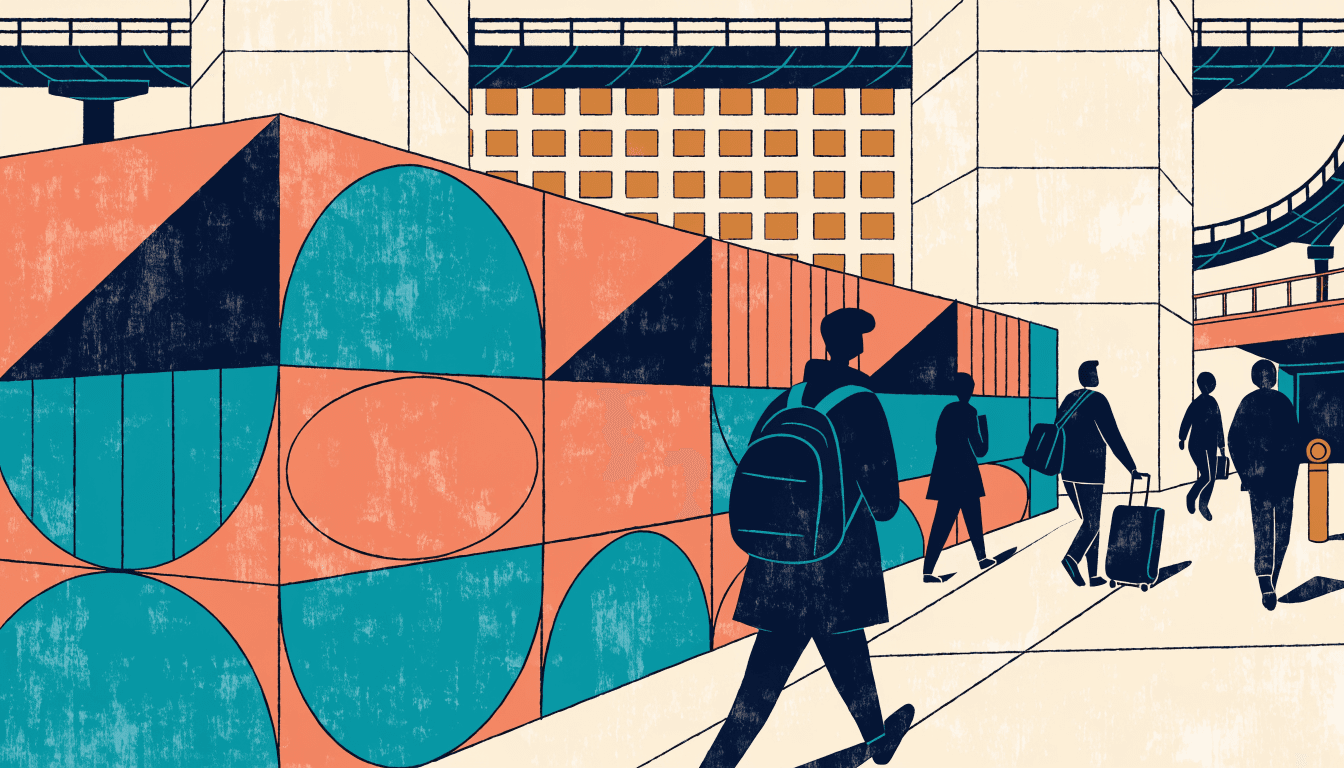
JR East will cover the construction hoarding around Shinjuku Station's east-exit plaza with a public art installation from 16 September, the railway operator said, with the display expected to run through around September 2027 depending on how construction progresses. The project, titled Museum of Contemporary Tokyo-Shinjuku (東京現代美術館・新宿), features a series called Life Stripe.
Life Stripe is the work of SPREAD, a creative unit formed by Hirokazu Kobayashi and Haruna Yamada, and translates ordinary daily activities — sleeping, eating, resting, working — into 21 colours mapped across 24-hour timelines, based on research the unit carried out among people who work, live in and pass through Shinjuku, according to JR East.
The installation is funded through the Tokyo Metropolitan Government's TOKYO CITY CANVAS grant programme, administered by Arts Council Tokyo, rather than out of JR East's own construction budget, and sits alongside the railway's Shinjuku Grand Terminal programme, its multi-year plan to knit the station, its plazas and the station building together and extend activity into the surrounding district.
Shinjuku is, by JR East's own description, the world's busiest railway station, and the hoarding project is a cheap way to keep its street-level presence intact while the harder, multi-year work of the Grand Terminal rebuild continues out of sight. Because the funding runs through a metropolitan arts grant rather than JR East's construction budget, the model is one other developers managing years-long station or building work — with retail tenants relying on footfall that a bare hoarding wall would otherwise dampen — could copy without carrying the cost themselves.