Imperial Hotel Kyoto's main building keeps its heritage listing, under a new name
Imperial Hotel, Ltd. says the Gion building it adaptively reused as its Kyoto property's main structure has retained its national heritage status, re-registered as the Former Yasaka Kaikan, after a preservation project that kept structural framing and salvaged more than a tenth of the original tiles by hand.
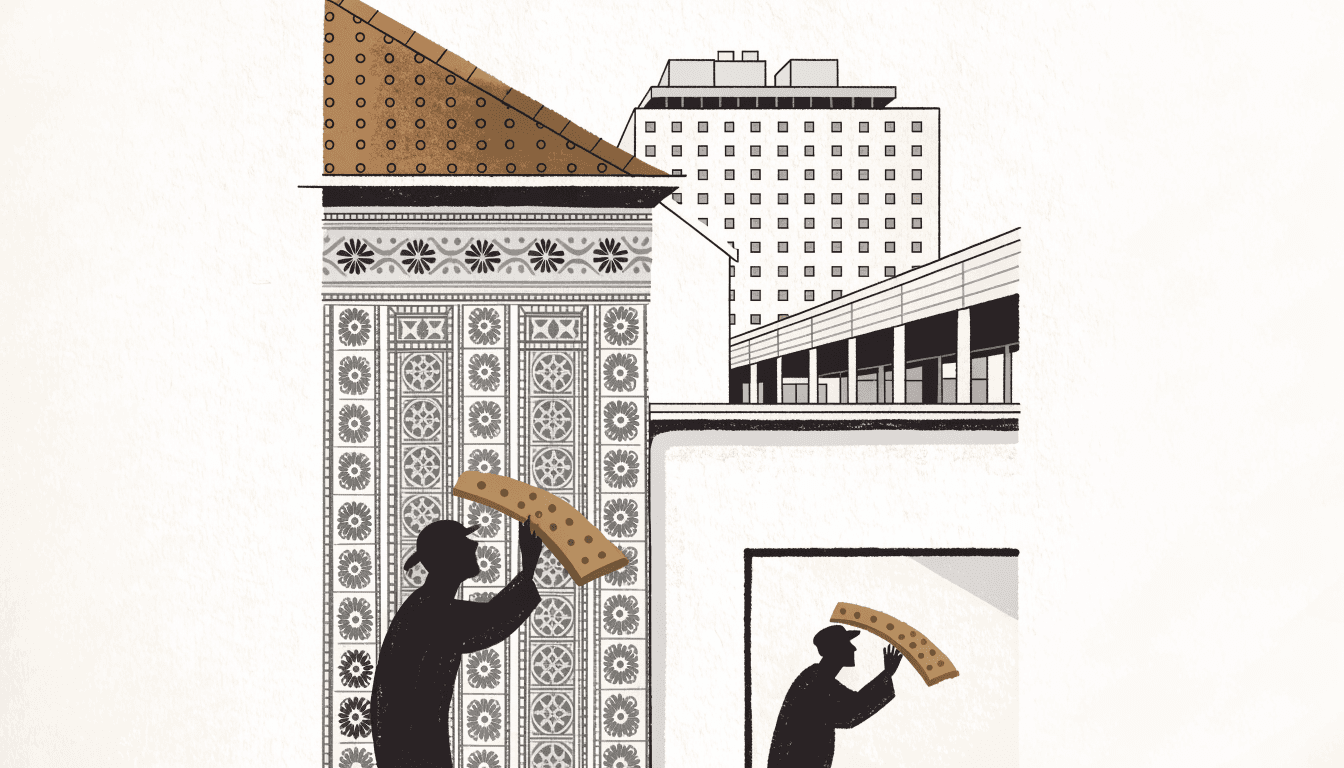
Imperial Hotel, Ltd. said the main building of its Kyoto property has kept its status as a national Registered Tangible Cultural Property, following a July 9 decision by Japan's Council for Cultural Affairs to re-register it under a new name: Former Yasaka Kaikan. The company confirmed the change in an announcement dated Aug. 12.
The building dates to 1936, when it was designed by Tokusaburo Kimura of Obayashi Corporation as the Yasaka Kaikan, an assembly hall built alongside the Gion Kobu Kaburenjo, the nearby performance venue for geiko and maiko, according to the company. It earned its national heritage listing in 2001 and was separately designated a Historic Scenic Structure of Kyoto City in 2011. Originally home to theatrical performances and ningyo joruri (traditional puppet theatre), it later served as a cinema, dance hall and concert hall before falling largely out of use, Imperial Hotel said, as deterioration and seismic-safety concerns made much of the building unusable, including the theatre it was built for.
Rather than demolish it, Imperial Hotel chose to preserve and adaptively reuse a portion of the structure as the main building of the Imperial Hotel, Kyoto, which opened March 5 this year on the Kaburenjo grounds in Gion. The company noted that alterations affecting more than a quarter of a Registered Tangible Cultural Property's building area or visible exterior generally require formal notification to the authorities; even with the preserved footprint reduced from the original, the project retained two exterior walls and sections of the original structural frame, along with the building's original exterior tiles, terracotta and roofline.
The southwestern facade, the most visible from the surrounding streetscape, was the priority. Imperial Hotel said 16,387 of the building's original tiles, 10.6% of those used before construction began, were salvaged using ikedori, a traditional technique for removing historic material intact for reuse, and reinstalled on the restored facade. The terracotta reliefs, carrying a stylised floral motif called hosoge, were individually restored and secured with structural anchor pins; the copper roof and its decorative metalwork were rebuilt to the original dimensions, including a hand-recreated character reading "uta" (song) on the round eave-end tiles. Inside the entrance vestibule, original ceiling and wall panelling were kept in place and etched glass bearing a plum-blossom motif was reinstated.
The distinction is worth drawing out. A great deal of adaptive reuse in Japan amounts to facadism: a thin original skin bolted onto a new structure behind it, enough to satisfy a streetscape rule without preserving much else. Retaining structural framing and more than a tenth of the original tile stock through hand removal is a costlier, slower commitment than that, and it is the kind of commitment a luxury operator can more easily absorb than a typical commercial redevelopment can. That the registration itself follows the building rather than the hotel — it is the Former Yasaka Kaikan that is listed, not the Imperial Hotel, Kyoto — is a reminder that the heritage status was earned by what was kept, not conferred by who now operates it. Imperial Hotel had already lined up a further credential ahead of the opening, joining The Leading Hotels of the World in April 2025; the cultural-property registration is the more locally consequential one, tying the property's standing in Gion to a regulatory process that will outlast any single operator.